
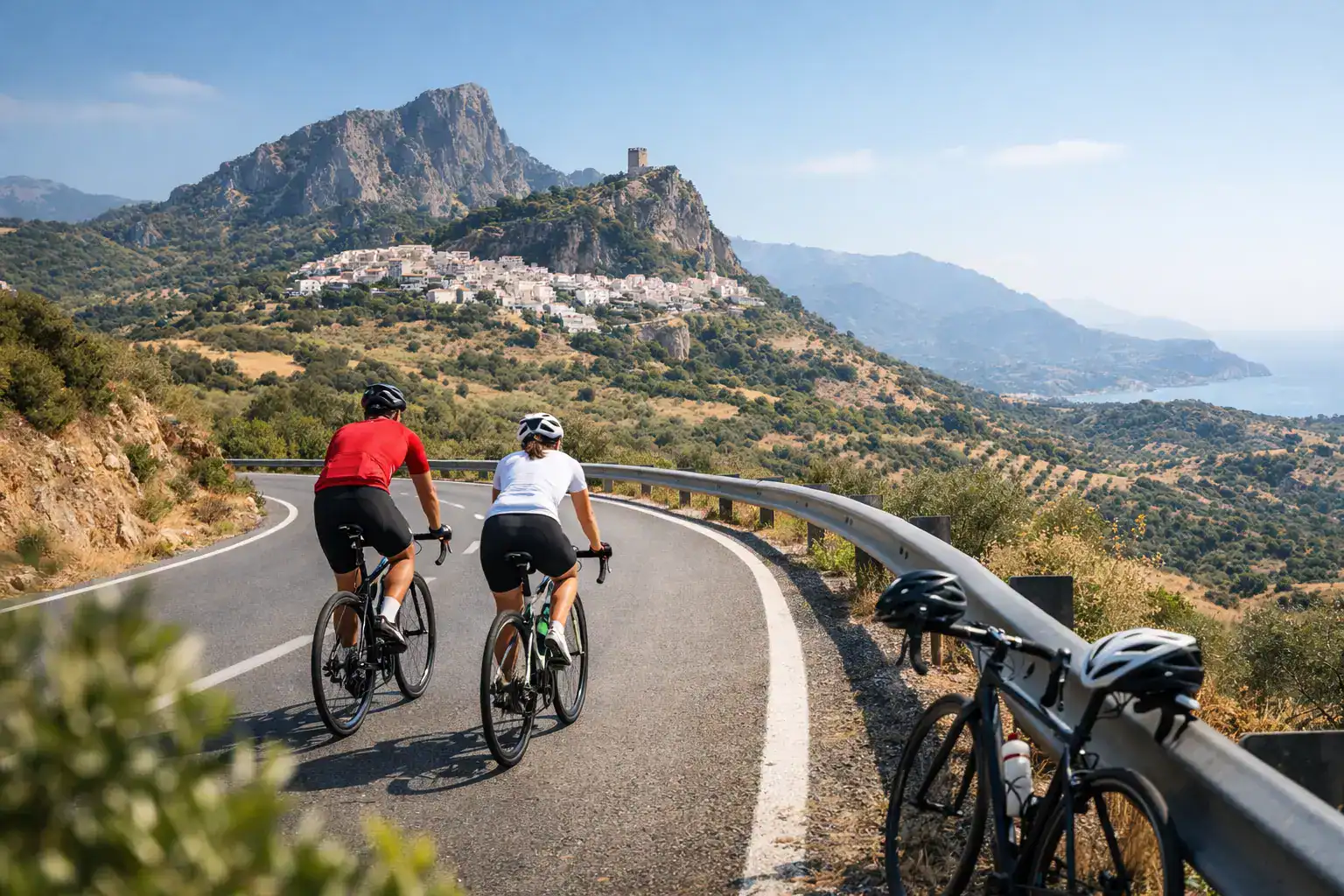
A good day on the bike in Spain usually starts quietly. Cool air, empty roads, a village bar setting out chairs, and the sense that the climbing ahead will be earned rather than endured. That is why road cycling holidays in Spain continue to attract serious riders from the UK and across Europe. Not because it is fashionable, but because few places combine weather, road quality, climbing variety and riding culture quite so consistently.
The catch is that Spain is not one simple cycling destination. It can mean long mountain passes in Girona, dry rolling roads in Andalucía, sharp inland ramps in Valencia, or smoother coastal riding with steady winter miles in Mallorca. The right trip depends less on the country itself and more on how well the route, timing and support match the kind of rider you are.
Why road cycling holidays in Spain work so well
Spain suits road riders because it offers range without losing character. You can build a week around big elevation and disciplined training, or around long scenic days with café stops and a more social pace. In both cases, the roads often feel made for cycling – generally well surfaced, lightly trafficked once you leave the busier corridors, and shaped by terrain that creates natural rhythm.
Climate is a major part of the appeal, but it should not be oversimplified. Yes, Spain gives riders more reliable sunshine than the UK, especially from late autumn through spring. But conditions vary sharply by region and season. Mallorca in February is very different from inland Granada in February. Northern Spain in May is not the same proposition as southern Spain in May. The best trips are built around those realities rather than sold on vague promises of year-round perfection.
Then there is the riding culture itself. Drivers are often more used to cyclists than in many other destinations, village life still shapes the route experience, and the food tends to work with the demands of long days in the saddle. You notice it in practical ways – decent coffee before the ride, simple lunches that actually refuel you, late-afternoon recovery in places that still feel local rather than built around mass tourism.
Not all road cycling holidays in Spain are the same
This is where many riders get caught out. Two trips can look similar on paper – seven days, guided, daily climbs, premium accommodation – and deliver completely different experiences.
One may be built around transfer-heavy logistics, busy roads and mileage for the sake of mileage. Another may be carefully paced, with route design that respects fatigue, weather patterns and group dynamics. That difference matters more than a polished itinerary.
For experienced riders, the quality of the route is usually the deciding factor. A good route strings together roads you would struggle to find on your own, balances hard and steady days, and avoids the dead kilometres that add distance but not enjoyment. It also accounts for what happens off the bike. Where you stay, how you recover, when you eat, and whether there is proper rider support all shape the week as much as the headline climbs do.
The group size matters too. Smaller groups are not only quieter and more pleasant. They are easier to manage on the road, safer on descents and more adaptable when weather, fitness or mechanicals change the day. If you are investing in a premium trip, that flexibility is not a luxury. It is part of what makes the riding feel calm and properly looked after.
Choosing the right region for your riding
Spain rewards specificity. If your goal is sustained climbing, Catalonia and parts of mainland eastern Spain offer excellent terrain, with long ascents that suit riders who like to settle into an effort and hold it. If you want a spring training block with smoother logistics and reliable facilities, Mallorca remains popular for good reason, though that popularity also means some roads and towns can feel busy in peak periods.
If you prefer quieter roads and a stronger sense of remoteness, inland regions often offer the better experience. The trade-off is that they can be more demanding. Services may be further apart, weather shifts can be sharper, and the riding can become selective very quickly. That is not a problem if the trip is designed well. It is only a problem when expectations are set badly.
For riders who enjoy cultural depth alongside strong road riding, southern Spain can be particularly rewarding. The scenery changes fast, villages still feel lived in, and the days tend to have a richness beyond the effort itself. But again, timing matters. In high summer, some regions are simply too hot for the kind of quality road riding most people are actually seeking.
What to look for in a premium road cycling trip
Strong support starts before the flight. The better operators do not just send a packing list and a GPX file. They help you arrive ready for the riding you have booked. That may mean honest conversations about difficulty, guidance on bike setup, and in some cases a personalised training plan so the trip matches your current fitness rather than the version of you from three summers ago.
That preparation is especially valuable on Spanish terrain. Climbs here are often steady but sustained, and a route that looks manageable on total distance can become far harder once repeated elevation and heat are factored in. Riders rarely regret arriving over-prepared. They often regret assuming general fitness will be enough.
On the trip itself, support should feel present without being intrusive. Good guiding is not about hovering. It is about reading the group, setting a pace that keeps the day together, adjusting when conditions change, and knowing when to split stronger riders off for extra distance or preserve energy for the next stage. The best guides are riders first. They know when a climb should be ridden at your pace, when a regroup point really matters, and when the route needs a small change to protect the quality of the day.
Accommodation and food matter more than many road cyclists admit. You do not need luxury for its own sake, but you do need places that understand what riders need: secure bike storage, good sleep, reliable breakfasts, and dinners that help recovery rather than turn into logistical theatre. Premium should mean thoughtfulness, not excess.
Guided or self-guided road cycling holidays in Spain?
It depends on what you value most.
Guided trips suit riders who want local knowledge, on-road support and the ease of having every detail handled. They also tend to work better in mountainous or more remote regions, where route decisions, weather calls and mechanical support can make a big difference to how enjoyable the week feels.
Self-guided trips can be brilliant for confident riders who like a little more independence. Spain is one of the better countries for this, thanks to road quality and the depth of route options. But self-guided only works well when the planning is still meticulous. The route files need to be excellent, hotels need to be chosen with riders in mind, and daily stages need to reflect real-world fatigue, not idealised averages.
For many riders, the sweet spot is a curated self-guided format with proper pre-trip support. You keep the freedom of riding at your own pace while avoiding the time drain and uncertainty of building a demanding trip from scratch.
The questions worth asking before you book
Ask how the routes were designed and who rides them regularly. Ask whether the published distances include optional extensions or mandatory kilometres. Ask what the average daily climbing really feels like in context, not just in numbers.
You should also ask about group ability. A trip described as suitable for intermediate to advanced riders can still vary hugely in pace and expectation. A well-run operator will be clear about who the trip is for and equally clear when it is not the right fit.
Finally, ask what happens when something changes. Weather, fatigue and mechanical issues are part of cycling. The real measure of a trip is not whether those things occur, but how calmly and competently they are handled when they do.
Cycling Nature Experience approaches this in the way riders usually prefer – with careful route design, small groups and support that starts well before the first pedal stroke. That kind of planning does not remove the challenge. It simply means the challenge is the riding itself, not the avoidable friction around it.
Road cycling in Spain is at its best when every kilometre feels chosen for a reason. If you book with that in mind, you are far more likely to come home with the kind of fatigue that feels satisfying, the kind of memories that stay sharp, and the sense that the trip gave you exactly what a proper cycling holiday should.
Leave a Reply