

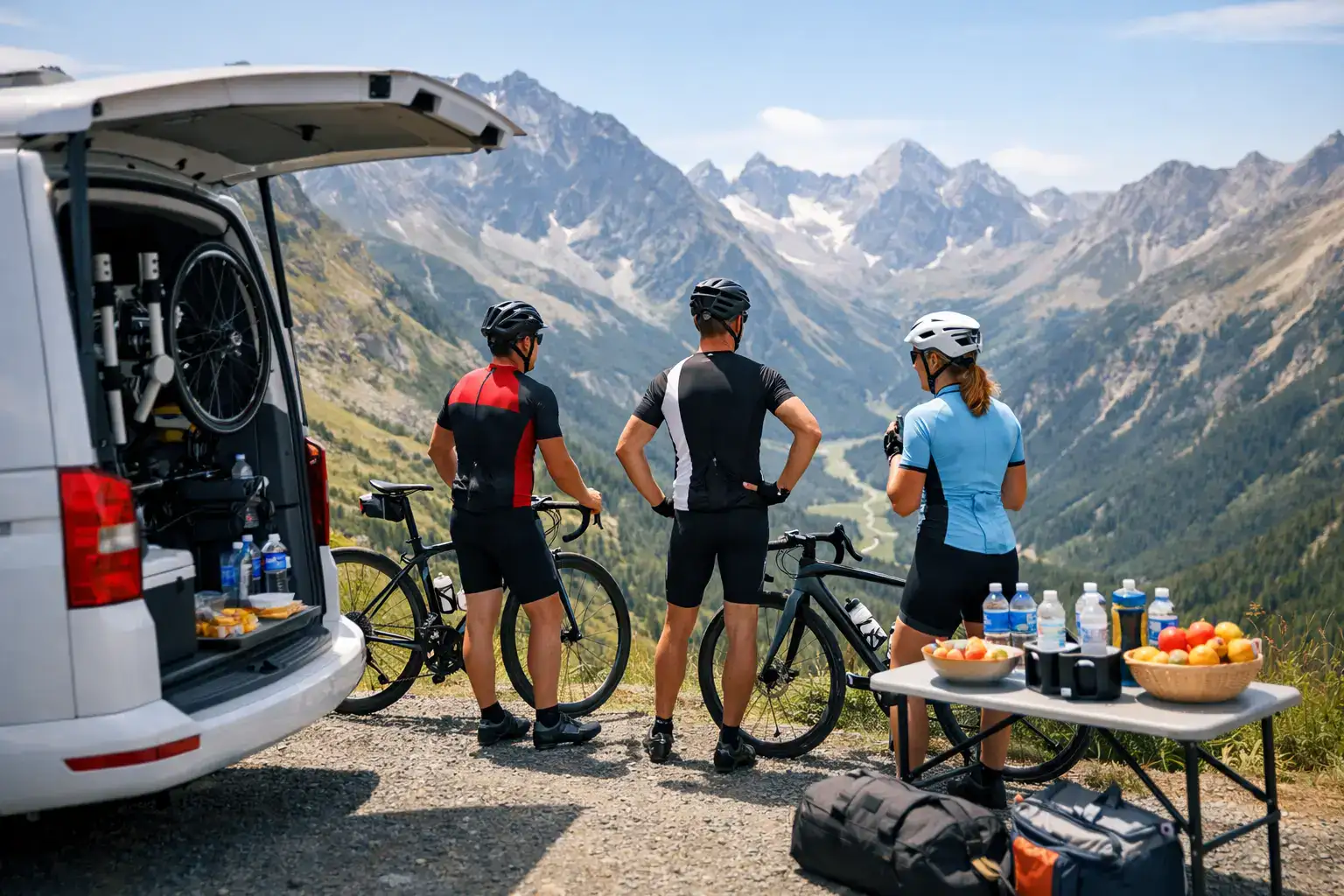
The difference usually shows up on day three. The legs are carrying yesterday’s climbing, the route turns remote, the weather shifts, and small decisions start to matter. That is exactly where supported cycling tours for experienced riders prove their value. Not because strong riders need hand-holding, but because the right support protects the quality of the riding when the days get longer, the terrain gets harder, and the goal is more than simply getting from one hotel to the next.
Experienced riders are rarely looking for an easy week away. They want proper routes, good surfaces, meaningful climbing, reliable pacing, and enough structure to let them focus on riding well. They also tend to know what spoils a trip: badly judged stages, vague logistics, mixed-ability groups that never settle, or support that exists on paper but not on the road. A well-designed supported tour solves those problems without dulling the sense of adventure.
What experienced riders actually want from support
Support means different things depending on who is selling the trip. For newer cyclists, it can mean reassurance. For stronger riders, it should mean precision.
That starts with route design. A good route for an experienced group is not just harder or longer. It is coherent. The terrain should build logically across the week. Climbs should feel worth the effort. Gravel sectors need to be rideable, not included for novelty. Road sections should connect the landscape rather than simply fill distance. When riders are fit and technically capable, they notice whether a route has been drawn by someone who understands fatigue, flow, and what makes a full day in the saddle feel satisfying.
Support also means pacing the whole trip properly. That includes transfer times, café stops that happen where they should, mechanical back-up, luggage movement, and accommodation choices that serve the riding rather than compete with it. None of that is glamorous, but it shapes the atmosphere of the week. Riders with experience tend to value the feeling that things are under control without becoming over-managed.
Why supported cycling tours for experienced riders work better than DIY trips
There is a certain pride in planning your own tour, and sometimes that is the right choice. If you know the region, have time to research every road and trail, and are happy to carry the risk of getting the details wrong, a self-built trip can be deeply rewarding.
But demanding multi-day riding in unfamiliar terrain is where DIY planning starts to show its limits. Mapping a route is one thing. Knowing which gravel track becomes unrideable after rain, which mountain road is quiet at the right hour, or which village works best for a late lunch after a long climb is something else entirely. That knowledge usually comes from repeated riding, not desktop planning.
Supported tours also remove the energy drain that sits around the riding. You are not negotiating baggage, chasing mechanics, improvising food stops, or second-guessing whether tomorrow’s route will be too much after today’s efforts. For experienced riders, that matters because it preserves physical and mental bandwidth for the part they have actually travelled for.
There is also the issue of consistency. On a well-run supported trip, each day belongs to the same bigger idea. The riding has a rhythm. The support team understands the terrain, the group, and the intended feel of the week. That is hard to replicate when every decision is made ad hoc.
The best support is felt quietly
Over-supporting experienced cyclists is a mistake. Most capable riders do not want to be supervised. They want confidence that if conditions change, if someone punctures three times on a flint-heavy section, if a rider has a bad patch on a hot climb, the response will be calm and competent.
The best support is often almost invisible. Bottles are filled when needed. Bags arrive where they should. The route briefing is short but useful. Alternative options exist for riders who need to manage effort. Mechanical issues are handled without drama. Group movement feels natural rather than forced.
That quiet competence becomes even more important in remote areas. On gravel tours especially, there can be long stretches without services, patchy phone signal, and surfaces that shift quickly with weather. A support structure built by people who ride these areas themselves adds more than convenience. It adds judgement.
Route quality matters more than route difficulty
A common mistake in this part of the market is assuming experienced riders only want the biggest numbers. Some do. Many do not. Most want a route that earns its distance and elevation.
A 120 kilometre day with repeated transitions onto poor tarmac, awkward traffic, and forgettable linking roads will feel longer than a properly designed 140 kilometre day that moves cleanly through a landscape. The same goes for gravel. Riders with good skills do not mind rough sections if they are purposeful, scenic, and proportionate. They do mind endless attritional terrain that feels included simply to make a route sound tougher.
This is where specialist operators stand apart. If the trip has been built by cyclists who understand both the sport and the place, the route carries intention. A climb is there because it opens the day. A ridgeline gravel sector is there because it changes the texture of the ride. A coastal road late in the week is there because the group will be ready to enjoy it at pace.
Group size and group chemistry are not small details
Strong riders often assume the main question is fitness. It is not. Group dynamics can shape the entire trip.
Large groups tend to stretch, fragment, and create too many different riding agendas at once. Very mixed abilities can leave some riders under-challenged and others quietly overreaching. Neither is ideal if the goal is a premium riding experience.
Smaller groups are usually better for experienced riders because they allow the pace to settle naturally. Conversations happen. Riders can rotate through turns, climb at their own effort, and regroup without the day turning into crowd management. Guides have more capacity to read the group, adapt if needed, and keep the atmosphere relaxed.
That matters more than many people expect. The strongest trip is not always the one with the hardest profile. It is often the one where the group rides well together and the support around them makes that possible.
What to look for before booking
If you are considering supported cycling tours for experienced riders, look beyond the headline distance and climbing figures. They matter, but they do not tell you how the week will feel.
Start with how clearly the operator describes the riding. Good providers are specific about terrain, stage length, elevation, and the kind of rider the trip suits. They should also be candid about the technical side of the route. Words like challenging or advanced are too vague on their own.
Then look at how they prepare riders before departure. This is often overlooked, yet it can be one of the clearest signs of quality. A thoughtful pre-trip process, ideally with training guidance, shows that the company cares about more than just filling places. It also improves the group experience because riders arrive with a better sense of what the tour demands.
It is worth checking who designs and leads the routes as well. There is a real difference between tours assembled from generic mapping and tours created by people who have ridden, tested, and refined every stage. The latter usually feel smoother, more personal, and better judged from start to finish.
Finally, ask what support actually looks like on the road. Is there a guide riding with the group? A support vehicle? Mechanical help? Flexible route options? Food and water planning for remote sections? Serious riders do not need inflated promises. They need clear answers.
Premium support is really about freedom
There is a reason experienced cyclists often come back from the best supported trips saying they rode more, saw more, and worried less. Premium support, when done properly, creates freedom rather than dependence.
You are free to concentrate on the climb in front of you, not the bag transfer. Free to commit to a remote gravel section because someone has already thought through the access, timing, and exits. Free to enjoy the place you are riding through because the logistics are not competing for attention.
That is particularly true on tours built around immersion rather than volume tourism. In the right hands, support does not put a layer between the rider and the landscape. It removes the noise that would otherwise dilute the experience. That is a subtle distinction, but an important one.
For riders who care about terrain, pacing, and the deeper shape of a journey, that is where the real value lies. Not in being looked after for the sake of it, but in knowing the whole trip has been designed to make every kilometre count.
Cycling Nature Experience builds trips around exactly that idea: strong routes, small groups, careful preparation, and support that serves the riding rather than distracting from it. For experienced riders, that tends to be the difference between a decent week away and a trip that stays with you.
Choose the tour that respects your riding, not just your booking, and the road tends to open up in all the right ways.
Deja un comentario